Category: Teaching, Learning, and Reflection

  • Yom Kippur Reflection by Paulo Neuhaus

    I will talk briefy about gazing at Virtual Panim, given my personal and family history of family dispersion since the 1930s, being born and raised in Brazil, and coming to the US in 1979 not as an immigrant, but as a professional expat.

    Simple typology of family structures: (a) large extended families mostly living in urban areas, where kids fnd jobs and form families; Margot’s admiration for multigeneration families going out to restaurants for Sunday lunch in Mexico City (her home town) when domestic help has the day off; (b) a more extreme version: folks in Rappahannock County (VA), where we have our country place, where the iconic families (Dwyers; Atkins; Jenkins; etc.) hold annual reunions with hundreds of participants; (c) the US norm, where kids wander off to college and then settle away from their family of origin, so families get together at Passover, Thanksgiving,
    Xmas, etc. and stay in touch by FaceTime; (d) my family history: having fed Germany relatively soon after the Nazis rose to power, the family dispersed to countless places, including Belgium, Brazil, Israel, Peru, South Africa, Switzerland, the UK and the US.

    For decades until my frst trip abroad in 1968 when I frst met these exotic relatives, my parents would ritually write each and every foreign relative on the High Holidays. (The South African branch mailed me a small gold plated tie clip for my Bar Mitzvah, which I found cool.) When I grew up, I picked up the mantle of cultivating these contacts with my diaspora family (unlike my siblings and Brazilian cousins, who seemed little interested) and have since visited them often in their home bases and offshoots (Croatia anyone?), participated in their offspring’s weddings in exotic locales, and assembled a quorum of visitors at Margot’s art show in Krakow.

    As for my immediate family of origin, the pain of separation was real and barely mitigated by sporadic reunions in Brazil or Washington DC, our home of 40 years while I worked at a multilateral organization. When we frst came to DC in July 1979 for my job (bringing the 6-week old Eva along), the pain of saying goodbye to my parents the day before we departed brought me to the verge of tears. In the days before the Internet and WhatsApp calls, my parents would faithfully send me a weekly airmail aerogram (does anybody remember?) describing their day-to-day trivia (and the weather), to which I responded in kind. And sporadic printed photos. But I could only fantasize about their actual Panim between our intermittent reunions in Brazil or the US, typically every 18-24 months. More recently, I was pained that I could not personally attend my brother’s funeral last December, which the local synagogue in Rio unwittingly rushed so that I could not arrive
    in time.

    In the family constellation, I proudly assumed the mantle of nurturing contacts with friends and relatives, including emailing birthday greetings to erstwhile British neighbors in DC who resettled back in the UK decades ago, or an engaging American dentist and his German-born wife who resettled in Berlin and whom
    I met only once (through mutual friends) when we visited their city a good 15 years ago.

    My parting comments: cherish your friends and relatives however near or far they may live, and strive to meet them Panim al Panim whenver you have a chance. As I begin to garner a modicum of wisdom in my 70s, I have become keenly aware that the two pillars of happiness are good health and close contact with family and
    friends—however far they may actually live.

    Hatima Tova to our latest cohort of Ann Arbor Pardes Hannah friends, whom we have entusiastically embraced since we moved here to be close to our kids.

    Dibarti!

    –Paulo Neuhaus

  • Kol Nidre Reflection by Deb Hansen

    In the spirit of a deep cleanse…I have learned to love this mournful evening, in these times of awe and wonder. It is such a rare place where you can bring the truckload of sorrow and remorse you’ve been carrying around, lay it down, and have it witnessed and blessed in community. And, hopefully, to collectively turn back to Life.

    I am grateful to have had the time to rest and reflect this past shmita year. When you slow down, things come up. I’m just beginning to realize the toll these past years have taken. I’ve been confronted with some of my own weaknesses, failures, and habitual ways. I can see more clearly the unyielding cruelty, violence, and sickness of modern culture. I’m learning to hold myself and others more gently in kindness and compassion.  

    I have come face-to-face with the rawness of the heart and the extent of the damage we have done. I hear the words, sixth mass extinction. I go numb. I cannot begin to take it in and experience the weight of it.

    How do I/we ask the children of Uvalde for forgiveness and say it will not happen again? How do I/we make amends to the children of Afghanistan when they have no food?   

    Last year was the year when I got clear that we, in wealthy countries, cannot  be bothered to even soften the climate calamity bearing down on the children.

    I can barely stand to mention Line 5. You can’t make this stuff up. The U.S. military is understood to be the greatest polluter on the planet and now we have the Army Corps doing an Environmental Impact Study on the proposed oil tunnel, new fossil fuel infrastructure which the governor’s administration approved last year in an undeclared climate emergency. Two more permits are needed.

    Meanwhile a Detroit-based business publication reported that the Army and the Michigan National Guard “are opening their training centers and military bases in the state to private industry, in a bid to advance new technologies on the battlefield and within the consumer marketplace.” What a relief to know that war is now simply an economic lever and business opportunity. No longer about bleeding bodies, severed limbs, cracking bones, fear, shock, dread, trauma. Camp Grayling, already the largest Nation Guard training facility in the country, may soon be doubling in size. Violence pervades every aspect of our lives.

    I wonder whether the words I speak are too depressing, even inappropriate. To speak them feels like too much. And yet coming face-to-face with all this, I feel both free and ferocious, clear that my only allegiance now is to Life and to the next generations.    

    These are the times of awe and wonder. Friends set up monarch nurseries where they shelter the rest of sleepy caterpillars. They show me photos of stained glass wings pressing against their cocoons. This tenderness and reverence is a quickening.     

    A family from another place is being welcomed and cared for by this community and others in Ann Arbor. It is what hospitality and generosity look like.  Meanwhile, in El Paso, there are 500 – 1,000 people passing through the shelters daily. There are not enough volunteers to keep up with it all, so many people with their temporary papers are dropped off at bus stations and airports.   

    I’m told we must be hopeful. I wonder what is this hope people speak of and hold with such a tight fist. There is a child running towards a busy street. You drop everything and scoop this kid back to safety. The most primal instinct to protect life just isn’t kicking in.

    I wonder if it wouldn’t be more appropriate to take a break from hope to be able to see more clearly and feel more deeply. What is this hope anyway? Is it optimism, wanting to believe that everything is somehow going to be okay for us, and we can carry on as we have?  

    Maybe hope is something grittier and more demanding, more luminous, and inexplicable. How could it be that people could walk to their deaths in Nazi Germany, praising Life? 

    Framing these times in terms of a great transition, the end of an epoque of history, liminal times, and glimmers of a world that is possible is something I find useful.

    I don’t know how this human project is going to come out. We’re already seeing increasing disruptions to daily life. Last I knew, a third of Pakistan was under water. I ruminate regularly on metaphors of transformation: the wandering of a people in the desert, the alchemy of turning base metal into gold, midwifery, and especially the metamorphosis of the butterfly. 

    Lately, it feels like a time when surrender is called for. I don’t mean giving up. I mean sensing that powerful energies are adrift in the world and over which we have no control. I mean we may be entering a liquid state like the caterpillar whose immune system is overwhelmed by the imaginal cells that carry the blueprint for what is to come. It must literally die, its body turning to soup, in order for the beautiful winged one to emerge.     

    In the meantime, let us kneel down together in humility, gratitude, and regret before the things we depend on for life – and turn back to tending, nurturing and watering this garden as if everything we love is at stake.  

    –Deb Hansen

  • Coming Face to Face with My Life, a Reflection by Margot Neuhaus

    When I read about the subject, Panim el Panim, I thought immediately about my very dear friend Elise and how I’ve been witnessing her coming Face to Face with her life with great dignity, courage, and grace, and how that has been helping me come Face to Face with mine.

    Elise is 84 years old, has been in oxygen 24/7 for years, and is now in hospice. She lives in Washington, DC and   is a hands-on healer and an artist who does beautiful silk embroidered wall hangings and collages. Her apartment feels like a sanctuary as it is sparse and the objects, art, and furniture she does have are noteworthy and special, conjuring a spiritual space. 

    Her grandparents’ names are at Yad Vashem in the Garden of the Righteous, as they rescued a Jewish couple who lived with them for two years.  Elise’s dignified demeanor and generousity reflect that inheritance. 

    She has a beloved daughter in New York with advanced cancer who is a single mother of an 8 year old son and has some support from some caring extended family. More recently Elise has been trying to go to New York to be with her daughter and bring her hospice care there, but her daughter got Covid, so she’s waiting in DC until there’s no risk of complications.

    Elise is loved by many as her phone is constantly ringing with friends wanting to talk to her and she typically has one or two visitors a day. 

    Elise is steeped in Zen Buddishm and some of her recurrent statements include:

    “It is what it is”.

    “Stay in the present moment”.

    “I’ve had a beautiful life”

    More recently, particularly in reaction to her daughter’s great pain, she has used these words:

    “very difficult,” “terrible,” “excruciating.”

    She has also said that it takes all her strength to stay centered.  

    Given her aesthetic sensibility and honesty I have also shown her my art work, as sometimes when in the midst of creating some new work I’m not very objective. Occasionally, she has told me that she feels that what I did doesn’t work. Except for a couple of  times I have agreed with her and invariably, it’s been very helpful. 

    Over the years, I have felt truly seen by Elise; she has alluded to that she has felt the same about me.  Face to Face.  

    It’s been a most special privilege to share our lives.  Among the many gifts, it has allowed me to witness and learn how to come to be Face to Face with my own life.

    –Margot Neuhaus

  • Sacred Connections, a Reflection by Roann Altman

    We are on the verge—of change, of infinite possibilities—not knowing what this year will bring. Face to face for Pardes-Hannah may be online via Zoom, in person in Ann Arbor, or some combination. Only time will tell. 

    I chose to join Pardes-Hannah for the first time last year because the services were being held via Zoom, where my participation would matter, rather than on YouTube, where no one would know whether I was there. 

    Apparently, I was looking for connection—connection that was meaningful, purposeful, and sacred. As a Mussar practitioner for many years, I knew that each moment provided an opportunity to choose what to do, where to go, and who to be. What would be for the highest good? Basically, what am I called to do or be? 

    How do we hear the call? It requires deep listening and the ability to hear what is not said. What is needed here? How might I step up and help? Am I willing to take on the responsibility to be of service here? What might this service look like? These are all Mussar soul traits (middot). 

    One call came just before the pandemic began to support a dear friend facing terminal cancer. It was a very holy time, filled with kedusha. He passed a few months into the pandemic: may his memory be for a blessing. 

    Thereafter, I was drawn to be in meaningful connection with others. I began to reach out to check in with friends and other spiritual seekers, primarily via Zoom. The encounters were extremely rewarding and meaningful; some were even sacred. They went beyond just “checking in.” People were eager to connect on what mattered to them, what they were working on. 

    When a connection had been made and a resonance was felt between us, we often continued to meet periodically. In some cases, the sharing was mutual; in others, it was more of a mentoring relationship, with many deeply blossoming over time. 

    At this time of year, as we revisit the past year and make amends, we engage in “constructive criticism” of ourselves. We might do this as well with others, and as long as the feedback is provided from a place of love, the other will be able to hear it and appreciate how to benefit from it. I believe it is this process that makes interactions meaningful, going far beyond everyday chit-chat. It is what brings holiness to our encounters. When we feel that another is speaking to us from a place of love, we trust what they have to offer us, and are grateful knowing that someone understands us. 

    I still listen for the call—and then Reb Elliot invited me to give a vort. It’s not really my thing to give talks, but I searched my Mussar toolbox, overcame my reluctance, stepped up my enthusiasm, and am joyfully here with all of you. 

    The question facing Pardes-Hannah (and many of us) is whether to continue on Zoom or return to Ann Arbor in person. The fact is, it doesn’t matter. People will join whatever is offered and speaks to them. Then each encounter will become sacred when those participating are doing so from a place of establishing a meaningful and purposeful connection with love. 

    So I ask: Are you listening deeply for the call? Where you are needed? Who you are being asked to be? How you can best be of service with others? Not in the sense of doing, as a separate self, but in the sense of being—being the flower you are, blossoming, attracting others on the path, to find spiritual companions, much like the chevrah in days of old. From a place of joy and love. This deep listening and sensitivity to the unspoken needs of others will help guide the Pardes-Hannah community. Thank you, Reb Elliot, for this opportunity to connect. Shana tova to all my fellow travelers.

    –Roann Altman

  • Face to Face, a Reflection by Jodyn Platt

    I come home unkempt with a hundred scraps of paper. Scribbled words. Big ideas distilled to three short words. One acronym with tacit vowels. Tasks undone. Gratitudes, whole-hearted, half-written. Condolences unspoken. The night rolls in. The moon sends the sun to sleep. I carefully pinch the pile in the middle, feel its solid well-intentioned core, and set it down. I’m tired. Each note a story, each sheet the white space in between. I lay a mask on top and breathe. Breathing in and out, returning again to the familiar rhythm of the days, this season, this sacred journey, that honest core.

    Face to face with exile, with violence, and bold-faced lies. Lying, fading, facing inward to seek the strength of trusting, compassion and kindness will find the long arc of justice. A million flags wave in remembrance, in humid heat, in ice of winter, in the sun of spring.

    Face to face with ocean waves, tides and eddies. I stand at the water’s edge and take my shoes off. The water’s cold and salty, promising to wash away the dust of today, to soften the sole for tomorrow. Waves crash and thrash leaving a thousand pebbled jewels drying in purple kelp and crevices of yellow sandstone. Our mothers and fathers have gathered here before. Lit fires, sang songs, gathered food and managed tribes as our children will before us. I see in your face the hope and fear of selfhood. It’s in mine too. Together we sweep and cast away, we carefully chip away the hard spots and with patience we find a way to raise our hands and hearts to hope and joy.

    Face to face in time. Eye to eye, turn around to see the past. Stand still to watch the future. Running, pacing. Uphill, downhill. The river stretches straight with shallow waters. The wind is still and the white heron rises over lily pads and reflected glassy straights. Fawns lose their spots and turkeys take their families for sabbath strolls. And still we patter on — face up to dodge the potholes. And still the pebbles slide into our socks. Our breath, unminded, feels short and labored. Patter on, reclaim the breath, return again to the strength of being with.

    Face to face in space. Eyes strain to see six feet apart. Arms reach out to touch in warm embrace. Who is it that steps forward? Leaning in to yud, tipping back to rest on hey. Standing tall for vav. Resting back, exhaling hey. Looking inward, inward facing out. What is, what was, what will be in this moment of the nexus face to face.

    Face to face in solidarity with the Divine within. Face to face in companionship with the Divine without. Seeking solace in the divinity that shapes our imperfect, crevassed ends. Entering / exiting the space of at one ment with no checked baggage. Trees rise thick and strong for the sleepy sloth. The journey through the worlds begins tonight in darkness, seeking authenticity and love, we navigate the light tomorrow brings.

    –Jodyn Platt

  • Watering Our Roots with Kindness

    Watering Our Roots with Kindness

    May 2022 – Iyar 5782 

    With gratitude for warmer weather and the aromas of spring, we enter the new moon of the Hebrew month of Iyar, a time to align our thoughts, feelings, and actions with our hearts and create healing in our lives. The energy of this month invites us to release what does not contribute to our personal or the planet’s health and well-being. What needs healing before we can root ourselves deeply into the fallow earth as it awakens?

    During this past year, many of us have pruned away aspects of our lives not essential to our being, which like a tree enables us to channel our energy back into new growth and evolution. As I plan to move from my house in Ann Arbor that has been my soul space, the sacred container of my life for 22 years, I feel the pain of loss as I release favorite books and family photographs, beloved art and musical instruments that have accompanied me to rituals and celebrations.

    I’m shedding the objects I no longer need on my life’s journey. It’s not the objects themselves that are important but the imbedded memories and lessons learned from my years of life experience. As Rabbi Abraham Joshua Heschel writes, “Things of space vanish. Moments of time never pass away.” Underneath the stuff of our lives that can be pruned away lies the vital energy of the shoots that can grow stronger and the recognition of who we are beneath our identifications and how we appear to the outside world.

    During this month as buds burst into bloom, we instinctively respond to the powerful life force calling to us, beckoning us out from the dark, interior places where we have resided this winter. Yet we are tender from the many loses we have individually and collectively witnessed and experienced. It’s the energy of compassion, the hallmark of this month of Iyar, that can soften our transition into a greater expansion and allow us to trust our intuition as we sow our seeds, so ripe with potential.

    We have the opportunity this month, symbolized by the spiritual practice of counting the Omer, to release old wounds and tap into our deepest longings, freed from many of the restraints of this past year. When we open our hearts to ourselves and others, welcome in and embrace the full range of our emotions, and release judgement, we can water our roots gently with kindness and compassion. As we carefully make our way back into the world with our altered consciousness after two years in isolation, let us be gentle with ourselves and each other, knowing we face the mystery of an unknown future. In this place of vulnerability and mystery, may we open our hearts to each other with expanded possibilities for connection, love, and peace.

    Blessings,
    Lucinda

  • The Long Journey to Freedom

    The Long Journey to Freedom

    The Long Journey to Freedom

    April 2022 Nissan 5782

    At this time of challenge and possibility, we enter the new moon of the Hebrew month of Nissan. Spring brings sweet aromas and joyful purple and yellow buds bursting through the once frozen earth in our northern climates. How do we reconcile this re-emergence of new life with the desolation and desperation of those suffering through war and starvation? Can we receive with open arms the gifts of beauty and hope and also hold the awareness that all is not well on planet earth?

    Close-up of purple and white crocus flowers blooming in a grassy field, symbolizing spring and renewal.

    This month, in the celebration of Passover, we retell the story of our ancestors fleeing from slavery, leaving behind the landmarks and activities that filled their lives, wandering in the desert of the unknown, seeking freedom. Today, we see men, women and children in Ukraine dodging bombs and bullets, hiding in crumbling rubble, fleeing from a modern-day Pharaoh who rains plagues of fire and destruction on neighbors who refuse to submit to his demands.

    Our wisdom tradition teaches that in Nissan, it is speech that can create healing. At this moment, President Volodymyr Zelensky’s voice is a clarion call to the world entreating us to wake up, to help his people maintain their freedom in the midst of the plague of invasion and chaos. Zelensky’s righteous anger is striking a visceral chord in senates and parliaments across the globe, inspiring politicians and citizens alike to rise in defense of democratic principles and values. He models courage and integrity to a beleaguered global community exhausted from its battle with the pandemic and still constricted with fear like the Israelites as they stood at the shore of the Red Sea.

    Across the ages, as a human community, we have had the choice to follow the leaders whose voices gave wing to our highest aspirations or those who pandered to our fears. In these unsettled times, I find it critical to surround myself with voices of love and compassion, of encouragement and hope. Just today, I heard a 9-year-old Ukrainian girl singing in her native language, “Let it Go,” a song my granddaughter constantly sings from the Disney classic, Frozen.

    Even in the most terrifying circumstances, we must nurture and hear the voices of hope and joy that can lead us to whatever version of the Promised Land we can envision. As we move into the spring, let each of us be the voice of hope and possibility to those around us who need our strength and courage.

    Blessings,
    Lucinda

  • Healing through Joy and Laughter

    Healing through Joy and Laughter

    March 2022    Adar II 5782

    Greetings,

    We are entering the new moon of the Hebrew month of Adar II. An extra month is added to the Hebrew calendar every seven years to synchronize it with the Gregorian solar calendar. The ancient wisdom of Kabbalah teaches us that it is the month of Adar that is doubled because we can experience the most joy and laughter in this month. It is joy that can create healing and inspire us to find the kernel of sweetness in the midst of our challenging life experience. 

    As Russian forces invade Ukraine and our country struggles to recover from the Covid pandemic, how can we taste a modicum of joy to keep our spirits high? As I was drinking my morning coffee and watching in horror the tanks roll into Kyiv and Kharkiv from all directions on my TV screen, I received a text from my son. I read that Volodymyr Zelensky, President of Ukraine, is the Jewish grandson of the one male survivor of a family of four sons, three of whom were killed during the Holocaust.

    This survivor of the Nazi devastation chose to focus his early career on comedy bringing humor and insight to the chaos and corruption around him. It is humor and laughter that can often pierce the veil of falsehoods and reveal the truth beneath the masquerade.

    We celebrate the holiday of Purim this month where we unmask those who would do harm. We honor the bravery of Queen Esther who stepped forward to save the Jewish people from destruction. In the Book of Esther, her uncle encourages her action: “Who knows but that you were born for such a time as this!”  Who knows if Zelensky or you or I were born for such a time as this, a time to stand our ground and speak truth to power?

    As the Israelites left Egypt and were surrounded by danger and deprivation on all sides, the women refused to leave music and dancing, joy and laughter behind them. They trusted they would survive and had their tambourines ready to celebrate on the other side of the Red Sea.   

    In times of challenge, it’s even more important to tap into the deep velvet void of creativity at the heart of our being and bring forth the beauty and joy of our highest selves. This is what can lead the way through the unknown mystery to the other side of the tumultuous waters. In this month of Adar II, let’s trust in the ancient wisdom and invite joy and laughter into our open hearts.   

    Blessings, 
    Lucinda

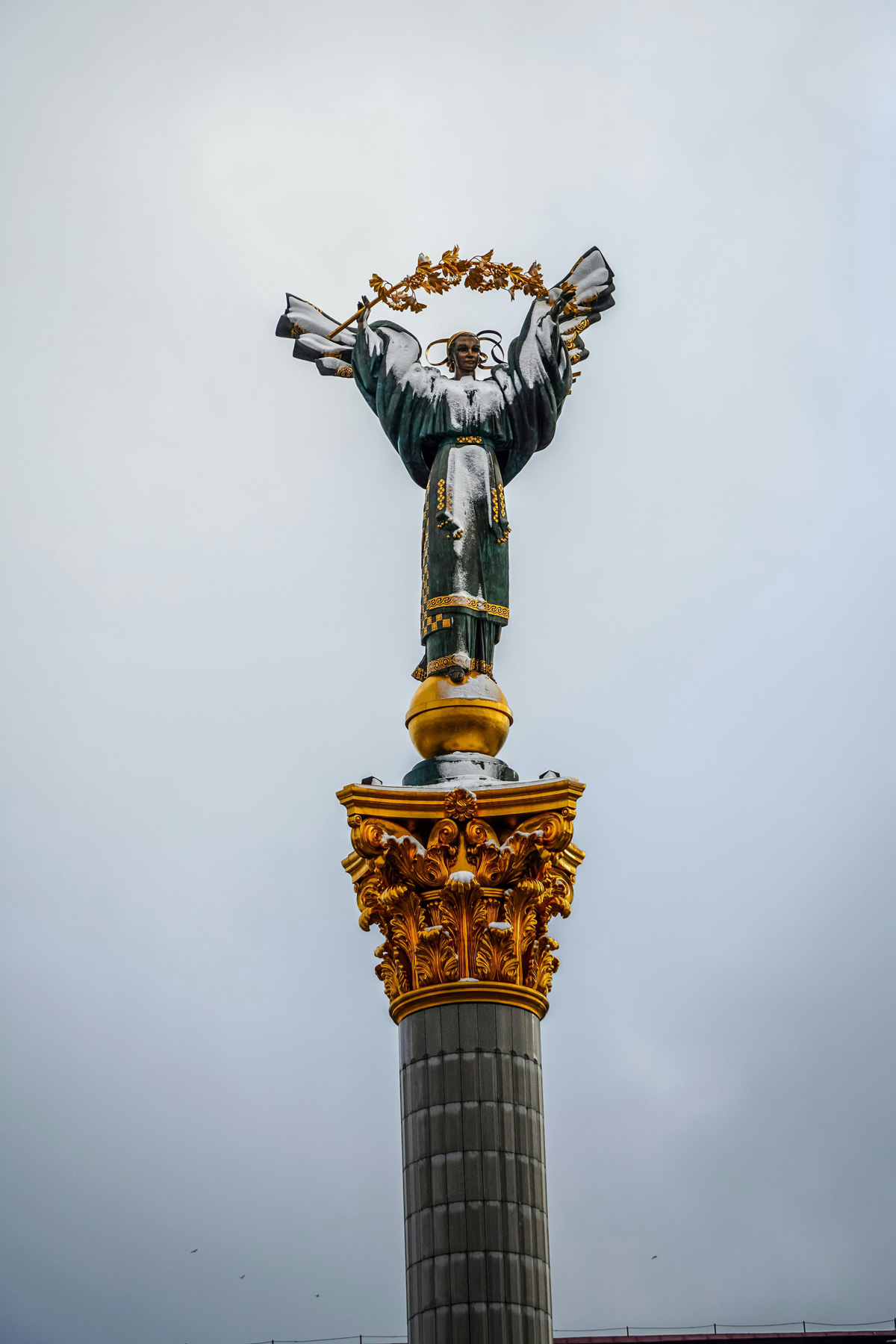
    PS.  The photo is of the monument in Kyiv, Ukraine, which commemorates the country’s 1991 independence. The figure at the top is the Slavic Goddess Berehynia, “the protectress of home.”  She holds a viburnum branch, the national symbol for women, motherhood, the soul of the nation, and love.  

  • Embracing Joy

    Embracing Joy

    January 2022    Adar 1 5782 

    Greetings,

    Just as winter deepens and spirits dampen in the bitter cold, the new moon of the Hebrew month of Adar invites our inner child out to play. We huddle in our homes protecting ourselves from Covid, from the wind and snow, from the multitude of challenges besetting us. This is precisely the time to open our arms wide, to break free from the contractive state that blocks the flow of creative energy and recover the joy we can claim for ourselves.

    laughing baby floating on air

    I just spent two weeks with my three year-old grandson rediscovering the world through his eyes. Every stone and rock, each seashell and wave are miracles of nature to amaze and delight, to explore and celebrate. Through the unfiltered vision of Henry, I can see the fluidity between all living things, the interconnection between the material and spiritual worlds that we are invited to experience in this month of Adar.

    The ancient wisdom of Kabbalah teaches us that the One created this world for joy and love, not for suffering. Yet it is through suffering that we deepen our understanding and compassion and keep our hearts open to each other and the world. 

    In The Book of Joy, His Holiness the Dalai Lama and Archbishop Desmond Tutu write, “No dark fate determines the future. We do. Each day and each moment, we are able to create and re-create our lives and the very quality of human life on our planet. Lasting happiness resides only in the human mind and heart.”

    Over the years, I have had the opportunity to stand in the presence of both of these wise and holy men. I heard them laugh and bring a lightness to their presentations that communicated an expanded perception of reality, not weighed down by suffering, though both had been imprisoned and abused.  They found a way to release the trauma they had experienced and step into the flow of light. 

    Many of us experienced our Rebbe, Zalman Schachter-Shalomi, exude that same childlike wonder and lightness more and more as he aged. There is something about the aging process that can return us to the joy of childhood if we are able to forgive ourselves and others for transgressions and embrace life wholeheartedly, recognizing we are graced with this one precious life on this planet for just a few short decades.

    It is possible for us as individuals, as a nation, and global community to meet the challenges we are facing head on through our intelligence and will. This is what Jane Goodall, another wise elder, implores us to do in her recent writings. We can learn from our elder sages and our children how to find joy in the mystery and marvel of the natural world that is the foundation of all life. Adar invites us, once again, to smile and embrace the miracle of life with gratitude and delight. Can there be any better way to warm our hearts during this frigid month? 

    Blessings, 

    Lucinda